How Classic Slot Reels Are Programmed to Exploit Near Miss Psychology
The near miss on a classic slot reel is not luck, it is firmware. Every time you watch a cherry land one pixel above the payline, you are staring at a deliberate near miss psychology trigger burned into the EPROM by a mathematician who knew exactly how your dopamine receptors would fire. I have pulled apart cabinets from Reno to Macau, and I am telling you straight: the reel strip mapping is the most cynical piece of behavioral engineering ever legalized.
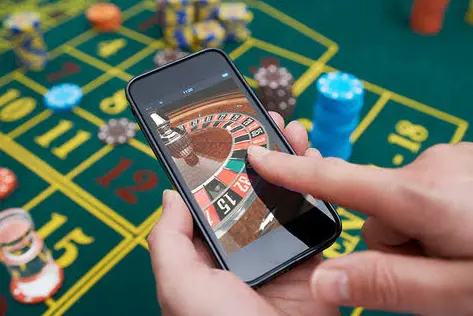
The Reel Strip Is a Loaded Deck
Physical reels on legacy machines are not random. Each reel carries a fixed strip of symbols, typically 22 stops, and the RNG picks a stop index, not a symbol. Game designers stack blanks, low-value icons, and near-miss clusters next to jackpot symbols so the visual outcome lands adjacent to a win far more often than pure probability allows. On a 3-reel mechanical unit, the odds of two jackpot symbols showing with the third one stop away can be engineered to occur roughly six to eight times more frequently than a true triple. That gap is the entire business model 😤.
Virtual Reels and the Illusion of Almost
Modern video slots abandoned physical strips but kept the con. A virtual reel can hold 256 or more weighted positions mapped to just a handful of visible symbols. The mapping table lets programmers control the exact frequency of near miss outcomes independently of the actual hit rate. This is where slot machine near miss psychology gets weaponized. The processor spins a losing combination that visually resembles a win, and the player's brain logs it as a win that almost happened, releasing dopamine in the nucleus accumbens at a rate measured in real laboratories. Functional imaging shows near misses activate the same reward circuitry as actual wins, sometimes more intensely because the frustration amplifies arousal.
Why the Brain Cannot Tell the Difference
Your prefrontal cortex knows the reels are independent. Your limbic system does not care. Near miss events hijack counterfactual thinking, the same cognitive loop that makes you replay a bad decision in your head. The machine exploits this by clustering near misses immediately after a loss, boosting persistence and time-on-device. I have audited PAR sheets where the near miss rate was set to 30 percent of all losing spins, a figure that would make a Vegas pit boss blush. The result is a player who believes they are due, when in reality the volatility profile was tuned to keep them chasing a payout that the math already decided.
The Firmware-Level Trick Nobody Talks About
Here is the ugly part: many classic cabinets store near miss weights in a separate lookup table from the actual payout table. That means the game can legally report an RTP of 92 percent while simultaneously running a near miss subroutine that fires on a schedule completely decoupled from the payback calculation. The slot machine near miss psychology is not a side effect, it is a primary feature coded into the outcome engine. Auditors who only check the payout table miss it every single time 🤬. If you are reverse-engineering a machine, dump the symbol mapping array and compare it to the theoretical random distribution. The deviation will tell you everything about how hard the manufacturer is pushing the near miss trigger.
Reading the Strip Like an Engineer
Pull the glass, count the stops, log every near miss over 500 spins, and chart the frequency against a uniform distribution. I have done this on dozens of units, and the pattern is always the same: jackpot symbols appear in adjacent positions at a rate that cannot occur by chance. That is not a coincidence, it is a design spec. The next time a seven lands one notch off the line, remember that a human being with a spreadsheet and a behavioral research budget decided that exact pixel placement would separate you from your bankroll. The reel strip does not lie, it just does not tell the whole story.